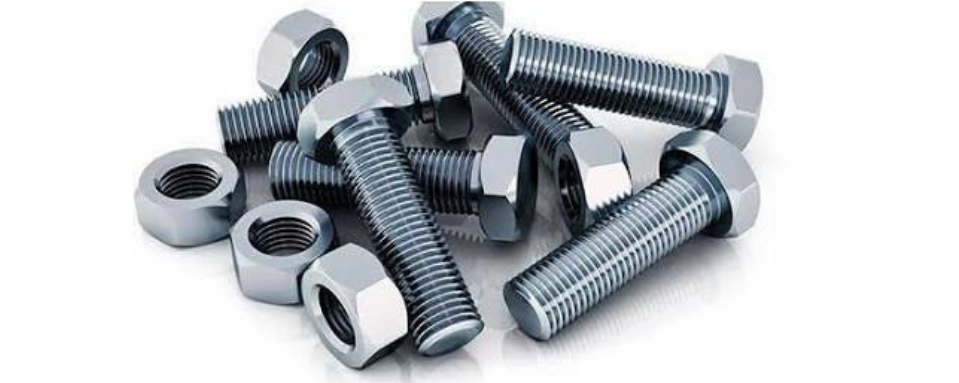
Product Overview
Steel Fastener Stockist & Supplier in India
steel fasteners are high-strength mechanical components manufactured for
applications involving heavy loads, elevated temperatures, pressure, vibration,
and demanding industrial conditions. As a reliable Steel Fastener
Stockist in India and Steel Fastener Supplier in India, Metal-Link Steel
& Alloys supplies a comprehensive range of bolts, nuts, stud bolts,
threaded rods, screws, washers, and custom fastening components in various
alloy steel grades.
An Steel Fastener is produced from steel containing controlled additions
of elements such as chromium, molybdenum, nickel, and vanadium. These alloying
elements can improve hardenability, tensile strength, toughness, creep
resistance, and elevated-temperature performance. The final properties depend
on the material grade, heat treatment, manufacturing process, and applicable
fastener specification.
With an established presence since 1985 and ISO 9001:2015, ISO 14001:2015 and
ISO 45001:2018 certifications, Metal-Link supports alloy steel fastener
requirements with material traceability, inspection documentation and
project-based supply.
Get
Factory Rates →
Datasheet
Steel Fastener Specifications
| Specification |
Details |
| Product |
Steel Fasteners |
| Material Grades |
ASTM A193 B7, B7M, B16 & ASTM A320 L7,
L43 |
| Nut Grades |
ASTM A194 Grade 2H, 4, 7 |
| Standards |
ASTM A193, ASTM A194, ASTM A320, ASME B18.2.1,
ASME B18.2.2, ASME B18.31.5 |
| Types Available |
Hex Bolts, Heavy Hex Bolts, Stud Bolts, Threaded
Rods, Hex Nuts, Heavy Hex Nuts, Socket Head Cap
Screws, Machine Screws, Set Screws, Anchor Bolts,
U-Bolts, Eye Bolts, Flat Washers, Spring
Washers |
| Thread Types |
Metric, UNC, UNF, and other thread forms as
required |
| Product Form |
Hot Forged / Cold Forged / Machined & Heat
Treated |
| Application |
High-Pressure, Elevated-Temperature & Industrial
Piping & Equipment Systems |
Product Range
Types of Steel Fasteners
As an experienced Steel Fastener Supplier in India, Metal-Link supplies
fastening solutions for piping systems, pressure equipment, machinery,
structural assemblies, refineries, and power generation facilities. Our product
range includes:
-
✓
Steel Hex Bolts
-
✓
Steel Heavy Hex Bolts
-
✓
Steel Stud Bolts
-
✓
Steel Threaded Rods
-
✓
Steel Hex Nuts
-
✓
Steel Heavy Hex Nuts
-
✓
Steel Socket Head Cap Screws
-
✓
Steel Machine Screws
-
✓
Steel Set Screws
-
✓
Steel Anchor Bolts
-
✓
Steel U-Bolts
-
✓
Steel Eye Bolts
-
✓
Steel Flat Washers
-
✓
Steel Spring Washers
-
✓
Custom Steel Fasteners
Types of Steel Bolts
Hex BoltsWidely used in
industrial equipment, machinery, structural connections, and bolted
assemblies. Their six-sided head allows controlled tightening using
standard tools.
Stud BoltsThreaded rods
typically used with two nuts, widely specified for flange connections
in pressure piping systems, refineries, petrochemical plants, and
high-pressure process equipment.
Heavy Hex BoltsHave larger
head dimensions than standard hex bolts. Commonly used in applications
requiring higher clamping loads and robust bolted
connections.
Anchor BoltsUsed to secure
equipment, machinery, structural steel, and other components to
concrete foundations or supporting structures.
U-BoltsCommonly used to
support and secure pipes, tubes, and structural components. Supplied
according to the required diameter, thread length, bend radius, and
material specification.
Steel Nuts & Washers
Heavy Hex NutsCommonly used
with high-strength stud bolts and heavy bolting assemblies. Dimensions
and mechanical properties selected according to ASTM A194 or ASME
specification.
ASTM A194 NutsCovers carbon,
alloy, and stainless steel nuts for use with high-strength bolts in
high-pressure or high-temperature applications. Common grades include
2H, 4, and 7.
WashersUsed to distribute
clamping loads, protect joint surfaces, and support the required
bolted assembly. Material and hardness selected according to bolt
grade, joint design, and applicable standard.
Material Grades
Steel Fastener Grades Available
| Material Grade |
Material Type |
Typical Service Application |
| ASTM A193 B7 |
Chromium-Molybdenum Steel |
High-pressure and moderate-temperature service |
| ASTM A193 B7M |
Steel with controlled hardness |
Specified sour service applications |
| ASTM A193 B16 |
Chromium-Molybdenum-Vanadium Steel |
Elevated-temperature and high-pressure service |
| ASTM A320 L7 |
Steel Bolting |
Low-temperature service |
| ASTM A320 L43 |
Nickel alloy steel bolting |
Low-temperature pressure applications |
ASTM A193 Grade B7 Fasteners
ASTM A193 Grade B7 is one of the most widely used alloy steel bolting materials
for high-temperature and high-pressure applications. It is generally
manufactured from chromium-molybdenum alloy steel and heat treated to achieve
the required mechanical properties.
- ✓High tensile
strength
- ✓Good
toughness
- ✓Suitable for
high-pressure bolted joints
- ✓Reliable performance at
moderately elevated temperatures
- ✓Widely used in flanged
piping and pressure equipment
B7 Steel Fasteners are commonly used in refineries, petrochemical plants,
pressure vessels, valves, pumps, and industrial piping systems.
ASTM A193 Grade B7M Fasteners
ASTM A193 Grade B7M is designed for applications where controlled hardness and
resistance to certain environmentally assisted cracking mechanisms are
important. It is commonly associated with sour service applications when
supplied in accordance with the applicable project and material
requirements.
- ✓Controlled hardness
requirements
- ✓Good strength and
toughness
- ✓Suitable for specified
sour service conditions
- ✓Used where environmental
cracking resistance is a critical
consideration
B7M fasteners are widely used in oil and gas processing, sour service
equipment, pipelines, and pressure-containing systems.
ASTM A193 Grade B16 Fasteners
ASTM A193 Grade B16 is a chromium-molybdenum-vanadium alloy steel bolting
material developed for elevated-temperature service. The vanadium addition and
heat treatment support improved high-temperature strength and creep
resistance.
- ✓High-temperature
strength
- ✓Improved creep
resistance
- ✓Good mechanical
stability under elevated temperatures
- ✓Suitable for
high-temperature pressure systems
B16 Steel Fasteners are commonly used in power plants, refineries,
boilers, turbines, and high-temperature piping systems.
ASTM A320 Grade L7 Fasteners
ASTM A320 Grade L7 is an alloy steel bolting material designed for
low-temperature pressure service. The specification requires Charpy impact
testing at low temperatures to verify suitable toughness for cold service
applications.
- ✓Suitable for
low-temperature service
- ✓Good impact toughness
at low temperatures
- ✓High tensile
strength
- ✓Suitable for cryogenic
and cold process equipment
L7 fasteners are commonly used in LNG facilities, cryogenic equipment, cold
process piping, and low-temperature pressure vessels.
ASTM A320 Grade L43 Fasteners
ASTM A320 Grade L43 is a nickel alloy steel bolting grade for low-temperature
pressure-containing applications requiring reliable impact performance at
low temperatures.
- ✓Good low-temperature
toughness
- ✓High
strength
- ✓Suitable for
low-temperature pressure applications
- ✓Used in cryogenic and
cold service equipment
L43 fasteners are selected for applications requiring reliable low-temperature
mechanical performance in critical pressure equipment.
Design Data
Standards, Specifications & Surface Treatments
Standards & Specifications
As a professional Steel Fastener Stockist in India, Metal-Link supplies
products according to applicable international standards and project
specifications.
| Standard |
Scope |
| ASTM A193 |
and stainless steel bolting for
high-temperature, high-pressure, and other
special-purpose applications |
| ASTM A194 |
Carbon, alloy, and stainless steel nuts for
high-pressure or high-temperature bolting |
| ASTM A320 |
steel and stainless steel bolting for
low-temperature service |
| ASTM F3125 |
High-strength structural bolting where
applicable |
| ASME B18.2.1 |
Square and hex bolts and screws |
| ASME B18.2.2 |
Square and hex nuts |
| ASME B18.31.5 |
Studs for general applications |
| DIN / ISO / EN / BS |
Alternative dimensional and material standards as
required |
Surface Treatment & Coating Options
steel fasteners may require protective surface treatments depending on
the service environment. The selected coating should be compatible with the
operating temperature, corrosion environment, thread fit, and required
tightening or lubrication conditions.
Plain / Self-ColourStandard
finish for fasteners used in dry or protected
environments.
Black OxideProvides mild
corrosion protection and is commonly used for industrial alloy steel
fasteners.
Zinc CoatingProvides
improved corrosion protection for atmospheric and moderate
environments.
Hot-Dip GalvanizingProvides
heavy-duty corrosion protection for outdoor and structural
applications.
PTFE / Fluoropolymer
CoatingUsed where thread lubrication and
corrosion-resistant coating are required simultaneously.
Phosphate CoatingProvides
surface protection and improved lubricant retention during
assembly.
Material Data
Composition, Manufacturing & Mechanical Performance
Chemical Composition & Alloying Elements
The properties of an Steel Fastener are influenced by its chemical
composition and heat-treatment condition.
| Alloying Element |
Primary Contribution |
| Chromium |
Improves hardenability and high-temperature
performance |
| Molybdenum |
Improves hardenability, strength, and creep
resistance |
| Nickel |
Improves toughness and low-temperature
performance |
| Vanadium |
Enhances grain refinement and elevated-temperature
strength |
| Carbon |
Contributes to hardness and strength after heat
treatment |
| Manganese |
Supports hardenability and mechanical
properties |
The exact chemical composition varies according to the specific ASTM grade or
customer specification and should be verified through the Material Test
Certificate.
Manufacturing Process
The manufacturing route for an Steel Fastener depends on its size,
geometry, material grade, and required mechanical properties. The process may
include:
- ✓Selection of certified alloy
steel bar or raw material
- ✓Cutting to the required
length
- ✓Hot forging or cold
forging
- ✓Machining of heads, shanks,
or special geometries
- ✓Thread rolling or thread
cutting
- ✓Quenching and
tempering
- ✓Stress relieving where
required
- ✓Surface treatment or
protective coating
- ✓Dimensional
inspection
- ✓Mechanical and material
testing
Heat treatment is a critical stage in alloy steel fastener manufacturing
because it determines the final balance of strength, hardness, ductility, and
toughness.
Mechanical Properties
steel fasteners are selected primarily for their ability to withstand
high mechanical loads and maintain joint integrity under demanding service
conditions. Important mechanical properties include:
- ✓Tensile
strength
- ✓Yield
strength
- ✓Proof
load
- ✓Hardness
- ✓Elongation
- ✓Reduction of
area
- ✓Impact
toughness
- ✓Creep resistance at
elevated temperatures
High-Temperature & Low-Temperature Performance
ASTM A193 Grade B7 is widely used for high-pressure bolting at moderate
elevated temperatures. Grade B16 provides improved strength and creep
resistance for higher-temperature service due to its
chromium-molybdenum-vanadium composition. For low-temperature applications,
ASTM A320 grades such as L7 are commonly specified because they are designed
to provide suitable impact properties at low temperatures. Proper material
selection should always be based on the design temperature and the applicable
pressure equipment or piping code.
Industry Use
Applications of Steel Fasteners
steel fasteners are used where standard carbon steel fasteners may not
provide sufficient mechanical strength or temperature resistance.
- ✓Oil & Gas
Processing:
Flange bolting,
equipment assembly, and piping connections in oil and gas
production and processing facilities using B7 and B7M grade
fasteners.
- ✓Petroleum
Refineries:
High-pressure and
high-temperature bolted connections in refinery process units using
ASTM A193 B7 and B16 fasteners.
- ✓Petrochemical
Plants:
Process equipment,
piping flanges, and vessel connections requiring high-strength alloy
steel fasteners.
- ✓Power
Generation:
Steam turbine,
boiler, and high-temperature piping bolting using B16 grade
chromium-molybdenum-vanadium fasteners.
- ✓Thermal Power
Plants:
High-pressure steam
and process equipment bolting requiring creep-resistant alloy steel
fasteners.
- ✓Boilers:
Pressure-containing bolted joints in boiler
systems and steam generation equipment using B7 and B16 grade
fasteners.
- ✓Pressure
Vessels:
Vessel flange
bolting and equipment assembly connections using ASTM A193 and ASTM
A320 grade alloy steel fasteners.
- ✓High-Pressure Piping
Systems:
Flange connections,
valve bolting, and instrumentation assembly in high-pressure
industrial piping systems.
- ✓Pumps &
Valves:
Equipment bolting in
pumps, valves, and pressure-containing components requiring
high-strength alloy steel fasteners.
- ✓Heat
Exchangers:
Flanged joint and
equipment bolting in heat exchanger installations using suitable
ASTM A193 grade fasteners.
- ✓Offshore
Installations:
Structural and
equipment bolting on offshore platforms using B7M grade fasteners
where sour service and environmental cracking resistance are
required.
Certification
Testing, Inspection & Quality of Steel Fasteners
As a dependable Steel Fastener Supplier in India, Metal-Link Steel &
Alloys can supply products with testing and inspection according to the
applicable material standard and project requirements. Available testing may
include:
- ✓Chemical composition
analysis
- ✓Tensile testing
- ✓Hardness testing
- ✓Proof load
testing
- ✓Impact testing where
specified
- ✓Positive Material
Identification (PMI)
- ✓Magnetic particle testing
where required
- ✓Ultrasonic testing for
applicable raw material or products
- ✓Thread gauge
inspection
- ✓Dimensional
inspection
- ✓Visual examination
With an established presence since 1985 and ISO 9001:2015, ISO 14001:2015 and
ISO 45001:2018 certifications, Metal-Link supports consistent product quality.
Documentation may include Material Test Certificates, heat-treatment records,
PMI reports, mechanical test reports, NDT reports, and third-party inspection
certificates.
View
Certificate →
Pan-India Supply
Steel Fastener Supplier & Stockist Across India
Metal-Link Steel & Alloys supplies Steel Fasteners to EPC
contractors, engineering companies, power plants, refineries, process plants,
fabricators, distributors and industrial buyers across major Indian markets.
As an Steel Fastener Supplier in India, Metal-Link supports standard and
project-specific requirements based on grade, size, thread type, and
quantity.
Cities We Supply
MumbaiPuneAhmedabadVadodaraSurat
DelhiGurugramNoidaChennaiBengaluru
HyderabadKolkataJaipurRajkotCoimbatore
VisakhapatnamNagpurIndore
Have Questions?
Frequently Asked Questions
What grades of alloy steel fasteners do you supply?
Metal-Link supplies Steel Fasteners in ASTM
A193 grades B7, B7M, and B16, and ASTM A320 grades L7 and L43, subject
to the required specification and availability.
What is the difference between ASTM A193 B7 and B16 alloy steel
fasteners?
ASTM A193 Grade B7 is a chromium-molybdenum alloy
steel widely used for high-pressure bolting at moderate elevated
temperatures. Grade B16 is a chromium-molybdenum-vanadium alloy steel
developed for more demanding elevated-temperature service, where the
vanadium addition provides improved creep resistance and high-temperature
strength compared with B7.
What is the difference between B7 and B7M alloy steel
fasteners?
Both B7 and B7M are chromium-molybdenum alloy
steel grades under ASTM A193. The key difference is that B7M has
controlled maximum hardness requirements intended to improve resistance to
environmentally assisted cracking in sour service environments. B7M is
commonly specified for oil and gas applications requiring NACE/ISO 15156
compliance, whereas B7 is used for general high-pressure and
moderate-temperature service.
What nuts are used with ASTM A193 B7 stud bolts?
ASTM A194 Grade 2H heavy hex nuts are commonly
used with ASTM A193 B7 stud bolts for general pressure piping and
equipment applications. ASTM A194 Grade 7 nuts are commonly paired with
B7M bolts for sour service. The appropriate nut grade should be confirmed
based on the service conditions and applicable project
specification.
What standards are used for alloy steel fasteners?
Common standards include ASTM A193 for alloy steel
bolting in high-temperature and high-pressure service, ASTM A194 for
compatible nuts, ASTM A320 for low-temperature alloy steel bolting, and
ASME B18.2.1 and B18.2.2 for dimensional requirements. DIN, ISO, EN, and
BS standards can also be referenced as required.
Can you supply material test certificates with alloy steel
fasteners?
Yes. Steel Fasteners can be supplied with
applicable Material Test Certificates (MTCs), chemical analysis,
mechanical test results, heat-treatment records, hardness test reports,
impact test results where required, PMI reports, and third-party
inspection documentation as required by the project
specification.
Request a Quote
Request a Quote for Steel Fasteners
Looking for an Steel Fastener Stockist in India for your oil
and gas, refinery, petrochemical, power generation, pressure
equipment, or industrial requirements? Contact Metal-Link Steel &
Alloys with your required fastener type, material grade, diameter,
length, thread type, applicable ASTM or ASME standard, quantity,
operating temperature, coating requirements, testing requirements
and documentation requirements for availability and project-specific
pricing.