
steel pipes and tubes are engineered for demanding applications where elevated-temperature strength, pressure resistance, toughness, and dimensional stability are critical. As an experienced steel pipes and tubes Stockist in India and steel pipes and tubes Supplier in India, we supply seamless and welded alloy steel pipes and tubes in a wide range of grades, sizes, schedules, wall thicknesses, and specifications.
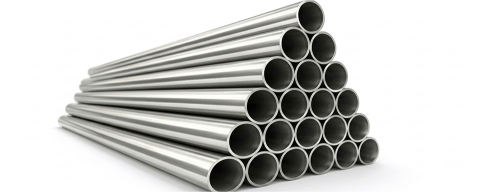
Unlike conventional carbon steel, alloy steel contains controlled additions of elements such as chromium, molybdenum, manganese, nickel, and silicon. These alloying elements improve mechanical strength, hardenability, creep resistance, oxidation resistance, and performance at elevated temperatures. steel pipes and tubes are therefore widely used in power plants, refineries, petrochemical facilities, boilers, heat exchangers, and high-pressure process systems.
Get Factory Rates →ASTM A335 P5 is a chromium-molybdenum alloy steel grade developed for elevated-temperature service. Its chromium content provides improved oxidation resistance, while molybdenum contributes to high-temperature strength.
Key characteristics include:
P5 alloy steel pipes are commonly used in refinery process piping, steam systems, petrochemical plants, and high-temperature applications.
P9 is a chromium-molybdenum alloy steel designed for high-temperature pressure service. Its higher chromium content provides improved oxidation resistance compared with lower-alloy grades.
Key characteristics include:
P9 pipes are frequently used in power generation, petroleum refining, furnace systems, and high-temperature process lines.
P11 is a widely used chromium-molybdenum alloy steel grade for high-temperature and high-pressure applications. It offers a practical balance between strength, weldability, and thermal performance.
Key characteristics include:
P11 alloy steel pipes are widely used in boilers, power plants, refineries, and petrochemical facilities.
P22 is a chromium-molybdenum alloy steel grade used for demanding high-temperature pressure service. It provides improved resistance to creep and thermal degradation.
Key characteristics include:
P22 pipes are commonly used in superheater and reheater systems, power plants, refineries, and high-temperature steam piping.
P91 is a modified 9Cr-1Mo alloy steel containing controlled additions of vanadium, niobium, nitrogen, and other elements. It is designed for high-temperature applications requiring high creep strength and reduced wall thickness.
Key characteristics include:
P91 alloy steel pipes are widely used in advanced power-generation plants, superheater systems, reheaters, and high-temperature steam pipelines.
As a reliable steel pipes and tubes Supplier in India, we supply different product forms based on pressure, temperature, fabrication, and application requirements.
Seamless alloy steel pipes are manufactured without a longitudinal weld and are commonly selected for high-pressure and high-temperature applications. Their absence of a welded seam makes them particularly suitable for critical pressure-containing systems.
Welded alloy steel pipes are manufactured by forming plate or strip and joining the edges using a controlled welding process. They can provide an economical solution for suitable large-diameter and process applications.
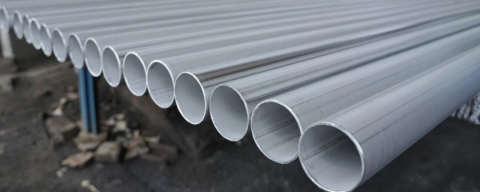
As a professional steel pipes and tubes Stockist in India, we supply products according to recognized international standards and project specifications.
Common specifications include:
The applicable specification depends on whether the product is intended for pressure piping, boilers, heat exchangers, or other specialized industrial applications.
steel performance is determined by controlled additions of alloying elements.
| Alloying Element | Primary Contribution |
|---|---|
| Chromium | Improves oxidation and corrosion resistance |
| Molybdenum | Improves high-temperature strength and creep resistance |
| Manganese | Contributes to strength and hardenability |
| Silicon | Supports oxidation resistance and deoxidation |
| Nickel | Improves toughness and selected corrosion properties |
| Vanadium | Improves high-temperature strength and microstructural stability |
| Niobium | Helps improve creep strength in advanced grades |
The exact composition varies by grade and must conform to the applicable material specification.
steel pipes and tubes are selected primarily for their ability to maintain mechanical integrity under demanding service conditions.
Important properties include:
Chromium-molybdenum grades such as P11 and P22 are commonly used for conventional high-temperature service, while P91 is selected for more demanding power-generation applications where creep strength is a critical design consideration.
steel pipes and tubes require controlled manufacturing and heat treatment to achieve the specified metallurgical properties.
The manufacturing process may include:
Heat treatment is particularly important for chromium-molybdenum grades because it influences hardness, toughness, creep resistance, and microstructure.
steel generally requires more controlled welding procedures than conventional carbon steel because alloying elements and material thickness can influence hardenability and susceptibility to cracking.
Important considerations include:
For grades such as P11, P22, and P91, welding and post-weld heat treatment requirements should be established according to the applicable code, material specification, and project procedure.
The chromium and molybdenum content of alloy steel provides improved performance at elevated temperatures compared with standard carbon steel. steel pipes are commonly used where operating temperatures may cause conventional carbon steel to lose strength or experience accelerated oxidation.
Applications involving:
can require alloy steel grades specifically selected for their temperature and pressure conditions.
The selection between alloy steel and stainless steel pipes and tubes should be based on temperature, pressure, process chemistry, corrosion exposure, fabrication requirements, and applicable design codes.
| Property | Steel Pipes and Tubes | Stainless Steel Pipes and Tubes |
|---|---|---|
| Primary Strength | High-temperature mechanical strength | Corrosion resistance and versatility |
| Typical Alloying | Cr, Mo, Mn, Ni and other elements | Higher chromium with varying Ni, Mo and other additions |
| High-Temperature Service | Excellent for suitable grades | Grade-dependent |
| General Corrosion Resistance | Moderate to good depending on grade | Generally higher |
| Common Applications | Boilers, power plants, refineries | Chemical, food, pharmaceutical, marine |
| Cost | Often economical for high-temperature service | Generally higher for equivalent applications |
steel pipes and tubes are widely used in industries requiring reliable performance under pressure and elevated temperatures.
Major applications include:
Quality testing is essential for verifying the chemical, mechanical, dimensional, and metallurgical properties of alloy steel products.
Available inspection and testing may include:
For critical applications, third-party inspection can also be arranged according to the customer's inspection and test plan.
View Certificate →As an experienced steel pipes and tubes Stockist in India, we supply alloy steel products for demanding power, petrochemical, refinery, and process-industry applications.
Our supply capabilities include:
As a dependable steel pipes and tubes Stockist in India and steel pipes and tubes Supplier in India, we supply alloy steel piping and tubing for high-pressure, high-temperature, and critical industrial applications.
Our range includes chromium-molybdenum grades such as P5, P9, P11, P22, and P91, available in seamless and other suitable product forms according to project requirements. Each product can be supplied with the required material certification, heat-treatment records, testing documentation, and traceability to support project quality requirements.
For an accurate quotation, provide the required grade, pipe or tube type, outside diameter, wall thickness or schedule, length, applicable ASTM/ASME specification, quantity, heat-treatment requirements, testing requirements, and documentation requirements.
Share your specification and get factory rates within 2 business hours.
Call +91 9167785999