
Hastelloy flanges are high-performance nickel-based alloy components engineered for piping systems operating in highly corrosive, chemically aggressive, and high-temperature environments. These flanges are widely used where conventional stainless steel and standard Steel Flange materials may not provide adequate resistance to pitting, crevice corrosion, stress corrosion cracking, reducing acids, or chloride-containing process media.
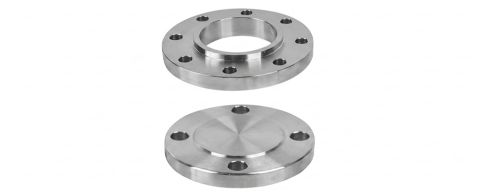
As a reliable Hastelloy Flange Stockist in India and Hastelloy Flange Supplier in India, we supply a comprehensive range of Hastelloy flanges in different grades, pressure classes, sizes, and flange configurations. Our product range is suitable for chemical processing, offshore systems, oil and gas facilities, power generation, pollution-control equipment, pharmaceutical plants, and other critical industrial applications.
Hastelloy alloys are primarily nickel-based materials developed to provide excellent corrosion resistance across a broad range of aggressive process conditions. Depending on the grade selected, Hastelloy flanges can offer resistance to hydrochloric acid, sulfuric acid, wet chlorine, oxidizing and reducing chemicals, seawater environments, and high-temperature process gases.
Our Hastelloy flange range is supplied according to customer drawings, dimensional requirements, applicable standards, and project specifications.
Get Factory Rates →As an experienced Hastelloy Flange Supplier in India, we offer flanges for industrial piping, process equipment, pressure systems, and specialized corrosion-resistant applications.
Our product range includes:
These flanges can be manufactured and supplied in a variety of face configurations, including:
Hastelloy is a family of nickel-based corrosion-resistant alloys. Each grade has a different chemical balance and is designed for specific operating conditions.
The selection of the correct Hastelloy flange should be based on factors such as:
Hastelloy C276 flanges are among the most widely specified nickel alloy flanges for severe corrosion service. The alloy contains nickel, molybdenum, chromium, tungsten, and controlled amounts of other elements that contribute to its broad corrosion resistance.
Hastelloy C276 offers strong resistance to both oxidizing and reducing chemical environments. Its high molybdenum content improves resistance to localized corrosion, while chromium contributes to oxidation resistance.
Key Characteristics:
Common Applications:
Hastelloy C276 flanges are frequently selected when a process system may encounter multiple corrosive chemicals or when operating conditions are difficult to predict.
Hastelloy C22 flanges are nickel-chromium-molybdenum alloy flanges developed for exceptional resistance to a broad range of corrosive environments. Compared with many conventional corrosion-resistant alloys, C22 provides excellent resistance to localized corrosion, particularly pitting and crevice attack.
The higher chromium content contributes to resistance in oxidizing environments, while molybdenum supports performance in reducing and chloride-containing media.
Key Characteristics:
Common Applications:
Hastelloy C22 flanges are particularly useful where the process medium contains mixed chemicals and where localized corrosion resistance is a critical design requirement.
Hastelloy C2000 flanges are designed to provide broad corrosion resistance through a carefully balanced nickel-chromium-molybdenum composition with the addition of copper.
The addition of copper improves resistance to certain reducing acid environments, particularly sulfuric acid, while chromium and molybdenum contribute to resistance across oxidizing and localized corrosion conditions.
Key Characteristics:
Common Applications:
Hastelloy C2000 flanges are selected when a single alloy is required to handle a wide range of chemical environments while providing enhanced performance in specific reducing acid services.
Hastelloy B2 flanges are nickel-molybdenum alloy flanges developed primarily for reducing chemical environments. The alloy provides excellent resistance to hydrochloric acid over a broad concentration and temperature range when suitable operating conditions are maintained.
Because of its metallurgical characteristics, Hastelloy B2 should be selected carefully for applications involving oxidizing contaminants.
Key Characteristics:
Common Applications:
Hastelloy B2 flanges are generally specified where resistance to reducing acids is more important than broad resistance to strongly oxidizing environments.
Hastelloy B3 flanges are an advanced nickel-molybdenum alloy developed for improved thermal stability and corrosion resistance in reducing chemical environments.
The alloy is particularly suited to hydrochloric acid service and provides improved resistance to certain metallurgical problems associated with thermal exposure.
Key Characteristics:
Common Applications:
Hastelloy B3 flanges are commonly considered for demanding reducing acid applications where fabrication performance and long-term corrosion resistance are important.
Hastelloy X flanges are nickel-chromium-iron-molybdenum alloy components designed primarily for high-temperature strength and oxidation resistance.
Unlike grades such as C276 or C22, which are commonly selected for severe aqueous corrosion environments, Hastelloy X is particularly valuable in elevated-temperature applications involving oxidizing atmospheres and thermal cycling.
Key Characteristics:
Common Applications:
Hastelloy X flanges are selected based on their ability to maintain mechanical integrity and oxidation resistance at temperatures where many conventional Steel Flange materials may lose strength or suffer accelerated scaling.
Hastelloy weld neck flanges are designed with a long tapered hub that is welded directly to the pipe. The tapered hub provides a gradual transition between the flange and pipe wall, reducing stress concentration.
These flanges are commonly used in:
They are particularly suitable where reliability and fatigue resistance are important.
Hastelloy slip-on flanges slide over the pipe and are welded in position. They provide a practical solution for systems where installation simplicity and alignment are important.
Typical applications include:
Hastelloy blind flanges are used to close the end of piping systems, pressure vessels, valves, and process openings.
They are commonly used for:
The flange must be selected according to the required pressure rating because blind flanges are subjected to significant bending stresses.
Hastelloy socket weld flanges are designed for smaller-diameter, high-pressure piping systems. The pipe is inserted into a socket and welded around the external joint.
These flanges are commonly used where:
Hastelloy threaded flanges are internally threaded and can be connected to compatible threaded pipe without welding. They may be useful in applications where welding is restricted, although their suitability depends on pressure, temperature, vibration, and process requirements.
Hastelloy lap joint flanges are used with stub ends and are suitable for systems requiring frequent dismantling.
Their advantages include:
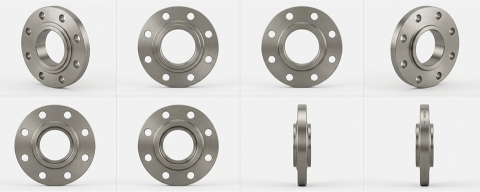
As a Hastelloy Flange Stockist in India, we can supply flanges according to project-specific dimensions and pressure requirements.
Common flange standards include:
Typical pressure ratings include:
Available sizes may range from small-diameter instrument and process piping flanges to large-diameter industrial pipeline flanges, depending on the selected standard and manufacturing capability.
The chemical composition of a Hastelloy flange varies according to the alloy grade. Nickel forms the primary base of the alloy, while chromium, molybdenum, iron, tungsten, copper, cobalt, and other elements are added to achieve specific corrosion and temperature-resistant properties.
| Element | Role in Hastelloy Alloys |
|---|---|
| Nickel | Provides the primary corrosion-resistant matrix and resistance in reducing environments |
| Chromium | Improves oxidation resistance and performance in oxidizing media |
| Molybdenum | Enhances resistance to reducing acids, pitting, and crevice corrosion |
| Tungsten | Supports corrosion resistance in selected grades such as C276 |
| Iron | Contributes to metallurgical balance and mechanical properties |
| Copper | Improves resistance to certain reducing acid environments in selected alloys |
| Cobalt | Controlled to meet specific alloy and application requirements |
| Carbon | Controlled to support weldability and corrosion performance |
Exact composition limits should always be verified against the applicable ASTM, ASME, UNS, or material specification for the selected grade.
Mechanical properties depend on the Hastelloy grade, manufacturing route, heat treatment, and product specification.
The key mechanical characteristics considered during flange selection include:
Nickel-based Hastelloy alloys generally retain useful mechanical properties in conditions where conventional Steel Flange materials may be vulnerable to corrosion-assisted damage or elevated-temperature degradation. Material test certificates should be reviewed to verify the mechanical properties of the supplied flange material.
The manufacturing process for Hastelloy flanges requires careful control because nickel-based alloys have different machining and hot-working characteristics compared with carbon steel or standard stainless steel.
A typical manufacturing process may include:
Proper process control is important to maintain dimensional accuracy and avoid metallurgical conditions that could affect corrosion performance.
Hastelloy alloys are generally weldable using suitable procedures and compatible filler materials. However, welding parameters must be selected according to the specific grade and service requirement.
Important fabrication considerations include:
For highly corrosive applications, the welding procedure should consider the complete system, including the pipe material, filler metal, process chemistry, and post-fabrication cleaning requirements.
One of the main reasons for selecting Hastelloy flanges is their ability to withstand severe corrosion conditions.
Depending on the grade, Hastelloy flanges can provide resistance to:
No single Hastelloy grade is suitable for every chemical environment. Material selection should be based on the actual concentration, temperature, pressure, impurities, flow conditions, and possibility of process upsets.
An Steel Flange and a Hastelloy flange serve different industrial requirements.
| Property | Hastelloy Flange | Steel Flange |
|---|---|---|
| Base Material | Nickel-based alloy | Iron-based alloy with alloying elements |
| Corrosion Resistance | Excellent in selected aggressive environments | Moderate to good depending on alloy and service |
| Chloride Resistance | Excellent for suitable Hastelloy grades | Generally more limited |
| Reducing Acid Resistance | Excellent for selected grades | Limited in severe chemical service |
| High-Temperature Capability | Excellent for grades such as Hastelloy X | Good for selected high-temperature alloy steels |
| Material Cost | Higher | Generally lower |
| Typical Applications | Chemical processing, offshore, pollution control | Oil and gas, power plants, industrial piping |
An Steel Flange may be a cost-effective choice for pressure and temperature applications where corrosion is controlled. Hastelloy flanges are generally selected when the cost of corrosion-related failure, maintenance, contamination, or downtime justifies the use of a premium nickel alloy.
Hastelloy flanges are used in industries where process reliability is essential and material failure can result in significant safety, production, or environmental consequences.
Hastelloy flanges are used in reactors, chemical transfer lines, acid handling systems, storage equipment, and process piping exposed to aggressive chemicals.
Selected Hastelloy grades are used in sour, chloride-containing, and corrosive processing environments where conventional materials may not provide sufficient service life.
Flue gas desulfurization units, scrubbers, waste treatment systems, and emission-control equipment often require materials with resistance to acidic condensates and mixed corrosive environments.
Hastelloy flanges can be used in critical process systems where corrosion resistance, material integrity, and contamination control are important.
Selected grades provide resistance to chloride-containing environments and are used in offshore processing and marine chemical systems.
High-temperature Hastelloy grades may be used in specialized thermal systems, turbines, heat-processing equipment, and high-temperature piping components.
Hastelloy flanges can be supplied according to applicable dimensional and material standards.
Dimensional Standards:
Material Specifications:
Material specifications depend on the Hastelloy grade and product form. Relevant ASTM and ASME specifications may include requirements for nickel alloy forgings, bars, plate, or other raw material forms used during manufacturing. The final product should be supplied according to the applicable purchase specification and project requirements.
Quality control is particularly important for Hastelloy flanges used in critical service.
Depending on the order specification, inspection may include:
Third-party inspection can be arranged through agencies such as:
Selecting the correct Hastelloy flange requires more than choosing a material grade based only on general corrosion resistance.
Buyers should evaluate:
For critical applications, material selection should be reviewed against corrosion data and project engineering requirements.
As a professional Hastelloy Flange Stockist in India, we focus on supplying industrial buyers with material solutions suitable for demanding process conditions.
Our supply capabilities include:
A dependable Hastelloy Flange Supplier in India should be able to support both technical and commercial requirements.
Before placing an order, buyers should confirm:
Proper procurement documentation helps ensure that the supplied Hastelloy flange matches the intended process and engineering specification.
Hastelloy flanges should be packed carefully to prevent mechanical damage and contamination during storage and transportation.
Typical packing methods include:
Special packing can also be provided according to customer requirements.
As a reliable Hastelloy Flange Stockist in India and Hastelloy Flange Supplier in India, we supply corrosion-resistant and high-performance flanges for demanding industrial applications.
Our Hastelloy flange range is available in multiple grades, including Hastelloy C276, Hastelloy C22, Hastelloy C2000, Hastelloy B2, Hastelloy B3, and Hastelloy X. We supply different flange types, dimensions, pressure ratings, and standards to meet the requirements of chemical processing, oil and gas, power generation, marine, offshore, pharmaceutical, and pollution-control industries.
For an accurate quotation, buyers can provide the required Hastelloy grade, flange type, size, pressure class, standard, quantity, testing requirements, and documentation requirements. This allows the correct material and flange configuration to be supplied for the intended service conditions.
Share your specification and get factory rates within 2 business hours.
Call +91 9167785999