
Inconel Flanges are high-performance nickel-chromium alloy components designed for piping and equipment connections exposed to elevated temperatures, severe corrosion, pressure fluctuations, and aggressive industrial environments. Unlike conventional carbon steel or standard stainless steel flanges, Inconel alloys retain useful mechanical strength across demanding temperature ranges while providing excellent resistance to oxidation, carburization, chloride-induced attack, and several corrosive process media.
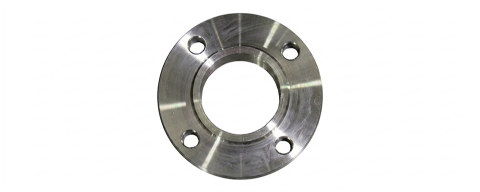
Depending on the required service conditions, Inconel flanges may be manufactured from different nickel-based grades, including Inconel 600, 601, 625, 718, and related alloys. Each grade has a distinct chemical composition and performance profile, so material selection should be based on temperature, pressure, process chemistry, mechanical loading, and fabrication requirements.
Inconel Flange products are widely used in chemical processing, petrochemical, power generation, aerospace, marine engineering, heat-treatment equipment, oil and gas processing, and other applications where conventional flange materials may not provide adequate long-term performance.
An Inconel Flange is a forged, machined, or otherwise manufactured piping component used to create a detachable connection between pipes, valves, pumps, pressure vessels, heat exchangers, and other equipment. The flange is normally joined to another flanged component using bolts and a gasket, allowing the system to be assembled, inspected, maintained, and disassembled when required.
The term Inconel covers a family of nickel-based alloys rather than a single material grade. These alloys are engineered for specific combinations of high-temperature strength, corrosion resistance, oxidation resistance, and resistance to demanding process environments.
The appropriate Inconel grade should therefore be identified on the purchase specification rather than ordering simply as a generic nickel alloy flange.
Get Factory Rates →Inconel Flanges are selected when the operating environment places greater demands on the connection than conventional steel or stainless steel materials can reliably withstand.
Key characteristics include:
The exact performance depends heavily on the selected Inconel grade and the process environment.
Different Inconel grades are designed for different engineering requirements.
Inconel 600 is a nickel-chromium alloy known for good resistance to chloride-ion stress-corrosion cracking, oxidation, and a range of organic and inorganic compounds. It is used in chemical processing, heat-treatment equipment, and applications involving elevated temperatures and corrosive media.
Inconel 601 contains significant chromium and aluminum additions that enhance oxidation resistance. It is particularly suitable for high-temperature environments involving repeated heating and cooling, such as furnace components, thermal-processing equipment, and industrial heating systems.
Inconel 625 is a nickel-chromium-molybdenum alloy with niobium additions. Its composition provides high strength and excellent resistance to pitting, crevice corrosion, and a wide range of aggressive environments. It is widely used in chemical processing, marine applications, offshore equipment, and oil and gas systems.
Inconel 718 is a precipitation-hardenable nickel alloy developed for high strength over a broad temperature range. It is commonly associated with aerospace, gas turbine, high-temperature mechanical, and specialized pressure-containing applications where strength is a primary design consideration.
The chemistry varies substantially between Inconel grades. Typical nominal or specification ranges include:
| Grade | Major Alloying Elements | Primary Characteristic |
|---|---|---|
| Inconel 600 | Nickel, Chromium, Iron | Corrosion and oxidation resistance |
| Inconel 601 | Nickel, Chromium, Aluminum, Iron | Enhanced high-temperature oxidation resistance |
| Inconel 625 | Nickel, Chromium, Molybdenum, Niobium | Corrosion resistance and high strength |
| Inconel 718 | Nickel, Chromium, Iron, Niobium, Molybdenum, Titanium, Aluminum | High mechanical strength |
Exact chemical limits depend on the applicable material specification and product form. Material certificates should be reviewed to confirm compliance with the specified grade.
The mechanical properties of Inconel flanges depend on alloy grade, manufacturing route, heat treatment, and product specification.
In general, Inconel alloys are valued for maintaining useful strength at temperatures where many conventional steels experience significant reductions in mechanical performance.
Important mechanical considerations include:
Inconel 718, for example, can achieve substantially higher strength through precipitation hardening, while Inconel 625 is particularly valued for its combination of corrosion resistance and mechanical strength.
For pressure-containing flange applications, allowable stresses should be determined from the applicable ASME design code and material specification rather than from general published room-temperature values.
One of the principal reasons for selecting an Inconel Flange is its resistance to aggressive corrosion mechanisms.
Depending on grade, Inconel alloys can provide resistance against:
Inconel 625 is particularly recognized for its resistance to localized corrosion because of its chromium and molybdenum content. However, no alloy should be considered universally corrosion-proof. Process concentration, temperature, impurities, flow conditions, and exposure time must all be considered during material selection.
Inconel alloys are frequently selected for high-temperature applications because several grades retain useful strength and oxidation resistance at temperatures where conventional carbon steel or standard stainless steel may become unsuitable.
Inconel 601 is particularly useful for oxidation-resistant high-temperature service, while Inconel 718 is used where high mechanical strength is required at elevated temperature.
For high-temperature flange assemblies, engineering calculations should consider:
The flange material cannot be evaluated independently from the complete bolted-joint assembly.
Inconel Flanges are available in several configurations to accommodate different piping and equipment connection requirements.
Common types include:
Weld Neck Flanges are designed with a long tapered hub that transfers stresses from the flange into the adjoining pipe. They are commonly selected for high-pressure, high-temperature, and cyclic service.
Blind Flanges are used to close the end of a pipe, nozzle, valve, or vessel connection. They are particularly useful when a system requires future access, inspection, maintenance, or isolation.
Slip-On Flanges are fitted over the pipe and welded into position. They can provide a practical solution for selected lower-stress piping applications, although the appropriate design must account for pressure, temperature, cyclic loading, and applicable code requirements.
Socket Weld Flanges are designed for smaller-diameter piping where the pipe is inserted into a socket and welded. They are commonly considered for high-pressure applications involving smaller pipe sizes.
Inconel flanges can be manufactured and dimensioned according to recognized international standards depending on the application.
Commonly referenced standards include:
The exact material and dimensional specification must be matched to the selected Inconel grade and flange type.
Inconel Flanges can be specified according to pressure classes such as:
The allowable pressure-temperature rating is not determined by flange class alone. The applicable material grade, temperature, flange dimensions, bolting, gasket, design code, and service conditions must all be evaluated.
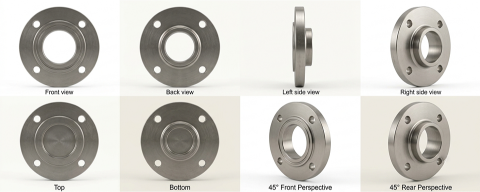
Manufacturing may involve forging, heat treatment, machining, drilling, facing, marking, inspection, and final dimensional verification.
Forging produces a dense and mechanically robust flange structure by shaping heated nickel alloy material under controlled conditions. Forged construction is commonly preferred for critical pressure-containing components.
Heat treatment depends on the specific Inconel grade. Solution treatment may be required for certain corrosion-resistant alloys, while precipitation-hardening grades such as Inconel 718 require carefully controlled heat-treatment schedules to achieve the specified mechanical properties.
After forging and heat treatment, flange faces, bolt holes, bore dimensions, hubs, and other critical surfaces are machined to the required dimensional standard.
Depending on project requirements, inspection may include:
Welding nickel-based alloys requires careful control of procedure, filler metal, heat input, joint preparation, and cleanliness.
Common welding processes include GTAW/TIG, GMAW/MIG, and other qualified processes appropriate to the alloy and application.
For Inconel 625 and similar corrosion-resistant alloys, appropriate filler-metal selection is essential because weld chemistry can influence corrosion resistance and mechanical performance.
Welding procedures should be qualified in accordance with the applicable project specification and welding code. For critical applications, weld procedure qualification and welder qualification should be documented.
Inconel Flanges are used in industries where corrosion resistance, high-temperature performance, or mechanical strength is more demanding than the capabilities of conventional flange materials.
Typical applications include:
Chemical processing systems may expose flange connections to acids, chlorides, alkalis, solvents, and elevated temperatures.
In these environments, the correct Inconel grade can provide improved resistance to localized corrosion and stress-corrosion cracking compared with conventional materials.
Inconel 625 is particularly relevant to applications requiring resistance to aggressive aqueous environments, while Inconel 600 and 601 can be considered for different chemical and high-temperature services.
Material selection should always be based on the actual chemical composition, concentration, temperature, pressure, and contamination profile of the process fluid.
Oil and gas systems can expose flanges to high pressure, hydrogen-containing environments, chlorides, sour-service conditions, temperature cycling, and aggressive production fluids.
For these applications, the selected Inconel grade must be evaluated against the relevant sour-service, corrosion, pressure, and material requirements.
Depending on the service, nickel-based alloys may be used in critical areas where conventional carbon steel or stainless steel cannot provide adequate resistance.
An Inconel Flange and an Steel Flange serve different material-selection requirements.
| Feature | Inconel Flange | Steel Flange |
|---|---|---|
| Base alloy | Nickel-based | Iron-based alloy steel |
| Typical alloying elements | Nickel, chromium, molybdenum and others depending on grade | Chromium, molybdenum and other alloying elements |
| Corrosion resistance | Generally excellent for selected aggressive environments | Varies by grade; generally lower than nickel alloys in severe corrosion |
| High-temperature capability | Excellent for suitable grades | Good to excellent depending on grade |
| Cost | Generally higher | Generally lower |
| Typical applications | Severe corrosion and high-temperature service | High-pressure and high-temperature systems |
| Material selection | Process chemistry and temperature driven | Pressure, temperature and mechanical requirements driven |
The term Steel Flange should therefore not be used as a substitute for an Inconel Flange when the engineering specification requires a nickel-based alloy.
The correct Inconel Flange should be selected using a systematic engineering approach.
Consider the following parameters:
Selecting a higher-alloy material without evaluating the complete system can increase cost without necessarily improving service life. The selected grade should provide the required performance for the actual operating environment.
For industrial and engineering projects, documentation can be as important as the physical flange.
Depending on the project, buyers may request:
Documentation requirements should be established before production or procurement so that the supplied material can be fully verified against the purchase specification.
View Certificate →An Inconel Flange Stockist in India should be able to supply the required grade, flange configuration, dimensions, pressure class, and material certification for the intended industrial application.
When evaluating an Inconel Flange Stockist in India, buyers should verify:
Stock availability can vary considerably between Inconel grades. Commonly stocked sizes should not be assumed to be available for every alloy or pressure class.
Choosing an Inconel Flange Supplier in India requires technical verification in addition to commercial comparison.
A capable supplier should understand the distinction between different Inconel grades and be able to match the product with the customer's technical specification.
Before placing an order, buyers should confirm:
For critical piping systems, the supplier's ability to maintain material traceability from raw material through finished flange inspection is particularly important.
Inconel Flanges provide a specialized solution for piping and equipment connections exposed to severe corrosion, high temperatures, pressure fluctuations, and demanding industrial environments. Their nickel-based metallurgy offers performance advantages that conventional carbon steel, stainless steel, and many Steel Flange materials cannot provide in certain applications.
The correct Inconel grade is critical because Inconel 600, 601, 625, 718, and other nickel alloys have different chemical compositions, strengthening mechanisms, corrosion resistance, and temperature capabilities.
For reliable procurement, buyers should work with an experienced Inconel Flange Stockist in India or Inconel Flange Supplier in India capable of supplying the specified grade with appropriate dimensions, standards, testing, certification, and traceability.
Rather than selecting a flange solely by price or generic material description, the final specification should be based on operating temperature, pressure, process chemistry, corrosion mechanism, mechanical loading, applicable standards, and complete piping-system requirements.
Share your specification and get factory rates within 2 business hours.
Call +91 9167785999